
About Dachshunds…..
According to the American Kennel Club, or AKC, the Dachshund is friendly, curious, smart, vivacious, and spunky. Originally bred to hunt badgers, the Dachshund is one of the most recognizable breeds out there. The AKC points out that because they have the bark of a big dog (not yappy), and are brave and stubborn, they make “fine watchdogs, but also love to give and receive affection.” Dachshunds are recognized in two sizes, miniature (less than 11 lbs.) and standard (17-32 lbs.) Dogs in the middle (11-16 lbs.) are called “tweenies.” Coats come in three varieties: long-haired, smooth coat, and wire-haired. These coats and colors provide for more combinations of Dachshund than any other breed.
Here at 4H Farms, we have dogs in smooth, long-haired coats.
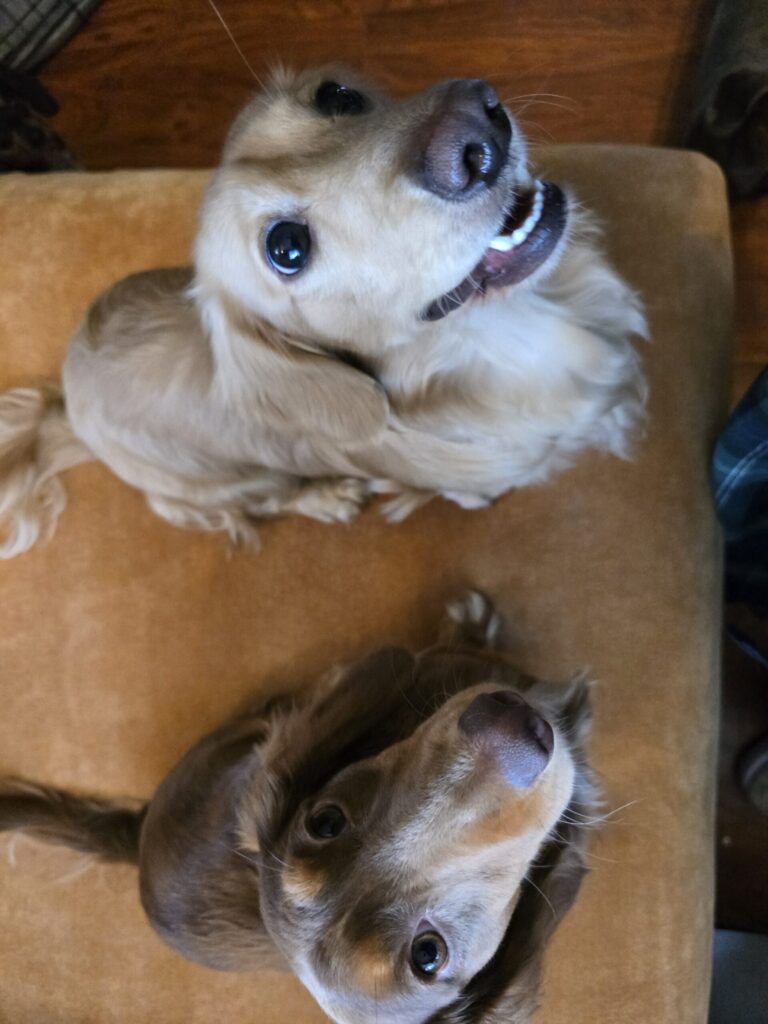
Discover the Unique Coats & Colors of Dachshunds
There are three different coat types of Dachshund: smooth, long-haired, and wire-haired. Smooth-coated dogs have a shiny, short coat. A long-haired doxie is sleek, but its fur may be wavy. These dogs often have the longest part of their coat on their ears, front of the chest, and tail. Their fluffiest part may be their tail, which AKC describes as “a veritable flag” in show dogs. The wire-haired surface coat is bristly and rough to the touch, and the breed standard dictates that they are groomed short throughout the body while maintaining a distinct beard and eyebrows.
There are Six Coat Patterns: one-colored, two-colored, Piebald, Dapple, Brindle, and Sable. We do not have photos of the latter two colors as 4H Farms has not bred these colors to date. Brindle refers to “black or dark stripes,” and Sable refers to dual-toned hairs that cause dark shading to overlay the red coat, according to the AKC Breed Standard.
Discover Dachshund Coats & Colors
Dive into detailed information about the unique coats, patterns, and colors of AKC-registered long-hair miniature and tweenie dachshunds.
One-and-Two Colored Dogs
Dachshunds come in six primary “self” colors: Black & Tan, Black & Cream, Chocolate & Tan, Chocolate & Cream, Cream, and Red. The first four are considered two-colored combinations, while Cream and Red are solid, single-colored coats.
It’s also common for Dachshunds in any of these colors to have a small patch of white on the chest. These base colors can appear in combination with various coat patterns — such as Dapple or Piebald — creating an incredible range of beautiful and unique looks.
Red is one of the original and most recognized Dachshund colors. The shade can vary from a light, golden red to a deep, rich mahogany or even a reddish-brown tone. Unlike many other coat colors, Red Dachshunds typically do not have tan or cream points, giving them a beautiful, solid appearance.
Piebalds
Piebald Dachshunds have distinctive, clearly defined patches of white mixed with their base coat color. They often share the same cream or tan points seen in their non-piebald counterparts. Most Piebalds have colored ears and a primarily colored head, giving them a charming, balanced look that makes each one beautifully unique.
Dapple
According to the AKC, Dapple Dachshunds have lighter-colored patches or spots scattered across a darker base coat, creating their signature speckled or marbled appearance. Some Dapples may also have small white markings on the chest or striking blue in one or both eyes — a beautiful and distinctive feature of this pattern.
Chocolate & Tan, Chocolate & Cream
Chocolate Dachshunds have a warm, rich brown coat accented with tan or cream points, similar to the markings seen on Black & Tan or Black & Cream Dachshunds. The chocolate color should be deep and even, giving these pups their signature glossy, velvety look.
Cream
Cream Dachshunds come in two variations: Shaded Cream and ee (Clear) Cream.
Shaded Creams are born with darker coats that gradually lighten as they mature, often keeping a soft overlay of black hairs along the ears, back, or tail. The amount of shading varies from dog to dog, creating tones that range from warm golden cream to light cream with darker highlights.
ee Creams, sometimes called Clear Creams, are much lighter overall. The “ee” genetic marker prevents black pigment from showing in the coat, resulting in a soft, uniform blond or pale cream color that is both elegant and rare.
Black & Tan, Black & Cream
Black & Tan is one of the classic, original Dachshund colors. These dogs have a rich black base coat with warm tan markings on the muzzle, chest, feet, and under the tail. Distinct tan “eyebrow” spots above each eye give them an especially expressive look — these lighter areas are known as “points.”
Black & Cream Dachshunds display the same pattern, but with softer, lighter cream accents instead of tan. A solid black Dachshund without visible tan or cream points is quite rare, as most carry the same Black & Tan genetics but simply don’t show the contrast in their coat.
Dilutes: Blue & Isabella
Dilute Dachshunds come in two color variations: Blue and Isabella. Blue is the diluted form of Black, while Isabella is the diluted form of Chocolate. Both colors have a softer, lighter appearance — with Isabella dogs generally appearing paler than Blues.
In some cases, dilute coats may have areas where the hair is finer or thinner, which is normal for these unique color variations.

Care & Maintenance
🪮 1. Brushing: The Foundation of Coat Care
- Frequency: Brush at least 3–4 times per week (daily during shedding season).
- Tools: Use a pin brush or slicker brush for detangling, followed by a wide-tooth comb to remove loose undercoat and prevent mats.
- Technique: Brush in sections from the skin outward, paying special attention to long feathered areas — the ears, chest, belly, and tail.
💡 Tip: Spritz a small amount of leave-in detangling spray or conditioner before brushing to minimize breakage and static.
🧴 2. Bathing: Keep It Gentle
- Frequency: Every 4–6 weeks, or as needed if your Doxie gets dirty.
- Shampoo: Use a gentle, moisturizing dog shampoo designed for long coats — ideally one that’s free of sulfates and parabens.
- Conditioner: A cream rinse or leave-in conditioner helps prevent tangles and keeps the coat silky.
- Drying: Towel-dry gently, then use a blow dryer on low heat while brushing to prevent mats as the hair dries.
✂️ 3. Trimming & Tidying
- Trim the hair between paw pads, around the sanitary areas, and under the tail regularly.
- The feathering on the ears and tail can be neatened slightly for a clean, polished look — especially if your Dachshund tends to drag or mat those areas.
- Some owners like a light trim on the chest “bib” for easier maintenance, but this is optional if you prefer a natural look.
🐕 4. Ear & Eye Care
- Long-haired Dachshunds are prone to ear wax buildup and ear infections due to their floppy ears.
Clean ears weekly with a vet-approved ear cleaner. - Trim excess hair inside the ear canal (if needed) for airflow.
- Check around the eyes for tear stains or debris and gently wipe with a damp cloth.
🐾 5. Nutrition for Coat Health
- Feed a high-quality diet rich in omega-3 and omega-6 fatty acids (from fish oil or flaxseed).
- Supplements like biotin or salmon oil can improve coat shine and reduce shedding.
- Always ensure your Doxie stays hydrated — healthy skin equals a healthy coat!
💛 6. Managing Seasonal Shedding
- Long-haired Dachshunds tend to shed more heavily in spring and fall.
Increase brushing frequency and use a deshedding comb or undercoat rake gently during these times. - Regular baths during shedding season can help loosen old hair and keep their coat glossy.
✨ 7. Professional Grooming
Ask your groomer for a “natural tidy” style — maintaining their signature flow while keeping the coat manageable.
Schedule a professional grooming session every 8–12 weeks, especially if your Doxie has thick feathering or tends to mat easily.
What coat types do AKC registered dachshunds have?
Discover detailed insights on the various coat patterns and colors of long-hair miniature and tweenie dachshunds to help you understand their unique characteristics.

What are the main coat varieties found in long-hair dachshunds?
Long-hair dachshunds typically have a silky, smooth coat that is longer around the ears, chest, and legs, giving them a distinctive, elegant appearance.
How do miniature and tweenie dachshunds differ in size and coat?
Miniatures are smaller, usually under 11 pounds, while tweenies are slightly larger but still under the standard size; coat types remain consistent across these sizes.
What are the common color patterns seen in dachshund coats?
Dachshunds can exhibit solid, dapple, brindle, and piebald patterns in a range of colors including red, cream, black, and chocolate.
Are there any special care considerations for long-hair dachshund coats?
Yes, regular grooming is essential to prevent matting and maintain the coat’s softness and shine, especially around feathered areas.